Mamad LabRCSI & FutureNeuro

Understanding CDKL5 Deficiency Disorder, from molecules to behaviour.

We study how the loss of a single kinase reshapes the developing brain, and use that knowledge to find treatments for a rare, severe epilepsy.

Why we do this

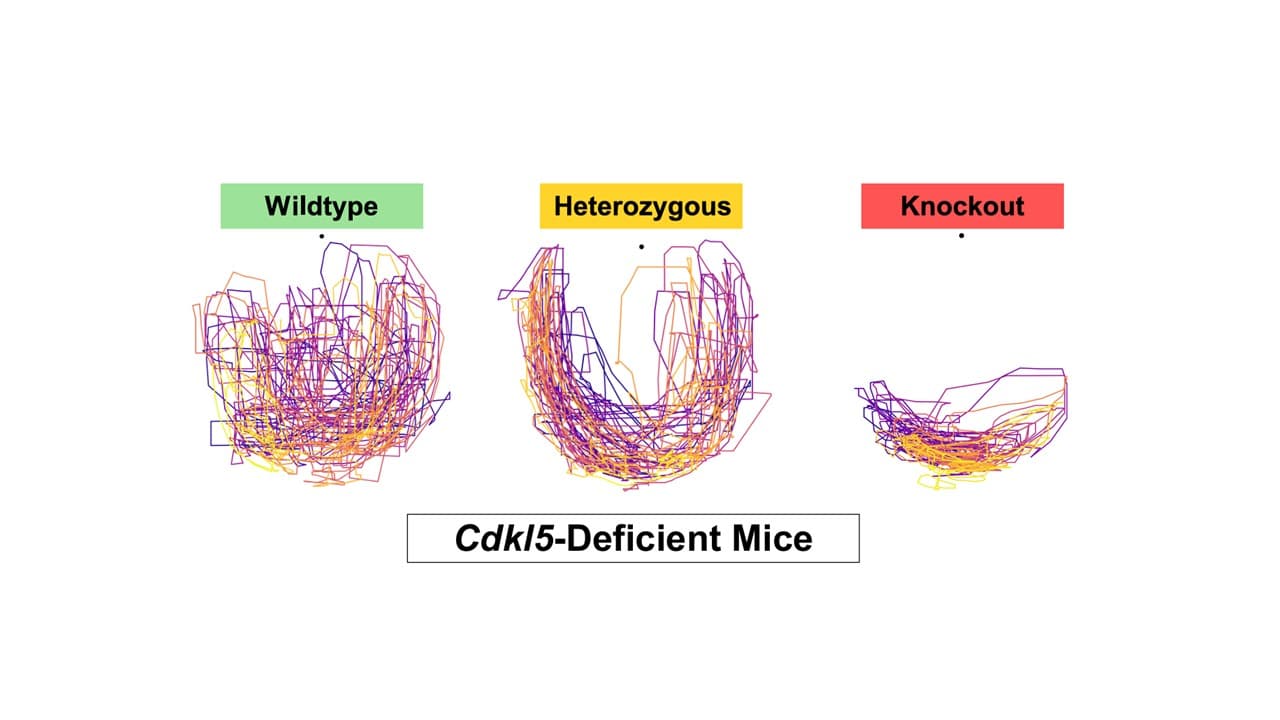
CDKL5 Deficiency Disorder (CDD) affects roughly one in every 40,000 to 60,000 births. Children develop treatment-resistant seizures within months of birth, alongside profound developmental, motor, visual and sleep problems. Current care manages symptoms only. Our lab combines preclinical disease models with molecular profiling, chronic EEG and machine learning to map what goes wrong when CDKL5 is lost, and to test therapies that target the cause rather than the symptoms.

26
Publications
7
Active projects
7
Team members
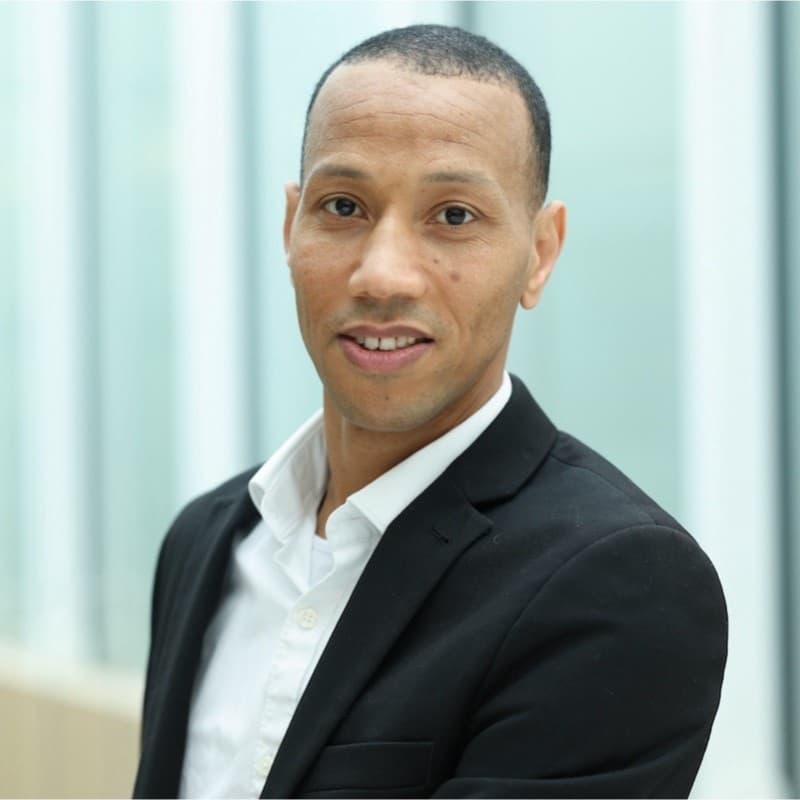
Dr Omar Mamad

Dr Omar Mamad

Principal Investigator. Lecturer in Physiology and Medical Physics, RCSI. Funded Investigator, FutureNeuro.

Three questions drive the lab

  1. 01

    Understanding the disease

    What are the molecular, cellular, network, behavioural and systems-level impacts of CDD?

  2. 02

    Biomarkers

    Can we develop non-invasive biomarkers to understand CDD and translate them to patients for improved diagnosis?

  3. 03

    Therapeutics

    Can we develop disease-modifying treatments with fewer side effects that target multiple aspects of the disease?

Current projects

Each project is led by a member of the team and tackles a different facet of CDKL5 Deficiency Disorder.

Selected publications

In conversation

Dr Mamad talks with FutureNeuro about researching CDKL5, a rare and severe genetic epilepsy, and what it means for families.

Latest from the lab

Media

Built with the CDD community : quote by CDKL5-UK

"Research gives our CDKL5 community hope. We greatly value the dedication of Omar Mamad and his team in advancing our understanding of CDKL5. By bringing researchers, clinicians and families together, we can move closer to better treatments and a brighter future for those living with CDKL5." CDKl5 UK

Full story

Funding

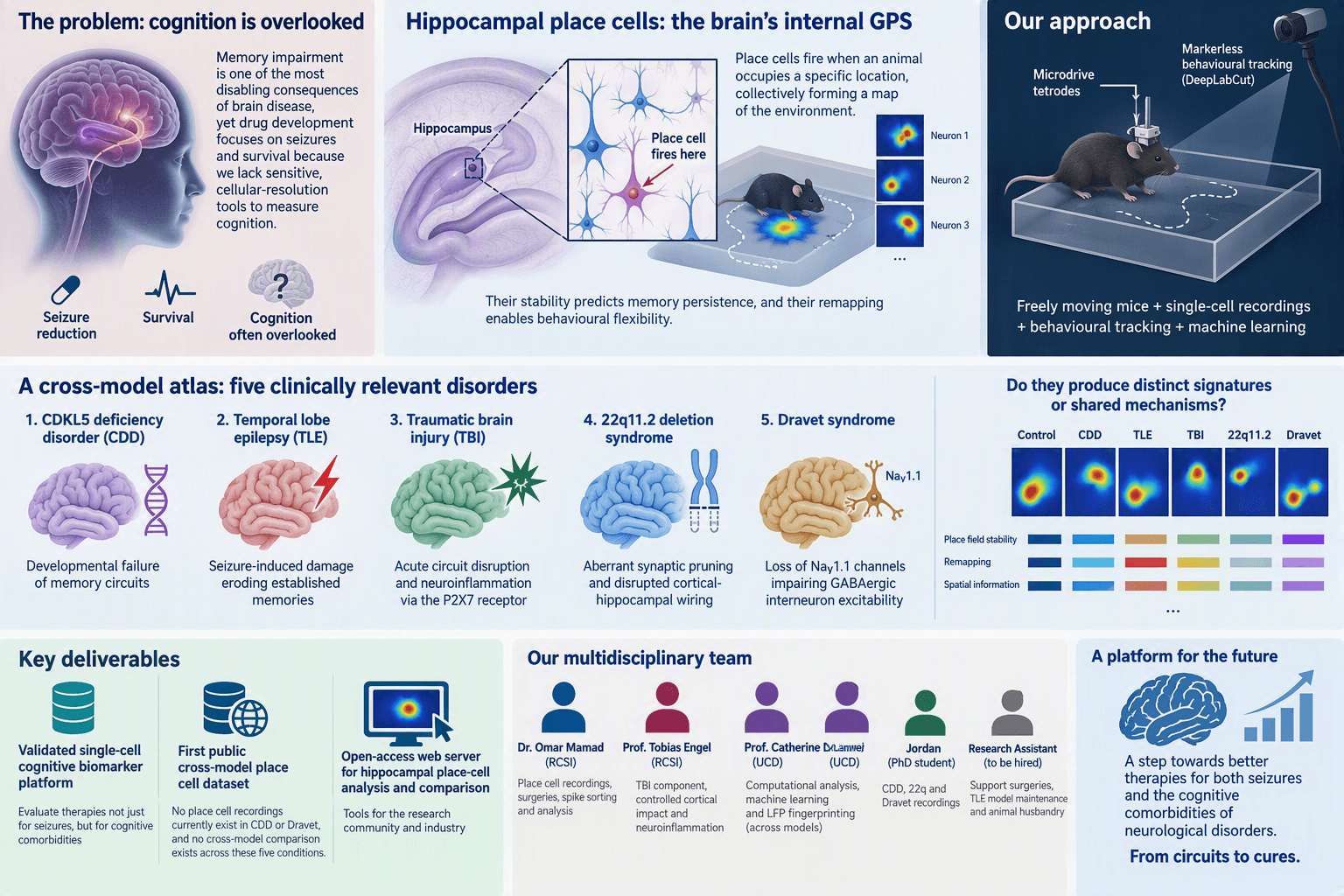
FutureNeuro Centre award Mamad's Lab: The Broken GPS — Single-Place-Cell Recording Across Neurological Diseases

Dr Omar Mamad has received a new award with grant funding from FutureNeuro, the Research Ireland Centre for Translational Brain Science, to support the lab's work on CDKL5 Deficiency Disorder. The €128,800 award funds "The Broken GPS" — a project using single-place-cell recording to build the first cross-model atlas of how the brain's internal GPS breaks down across CDD, TLE, TBI, 22q11.2 deletion syndrome, and Dravet syndrome.

Full story

Supported by

  • Research Ireland
  • SFI-IRC Pathway Programme
  • FutureNeuro
  • RCSI
  • CDKL5 Ireland
  • CDKL5 UK
  • Loulou Foundation / Orphan Disease Center, University of Pennsylvania
  • CDKL5 Alliance

Work with us

Join a team at the frontier of genetic epilepsy research. Our lab combines expertise in non-coding RNA biology, in vivo electrophysiology and computational behaviour analysis to understand and ultimately treat genetic epilepsies, with a particular focus on CDKL5 deficiency disorder.